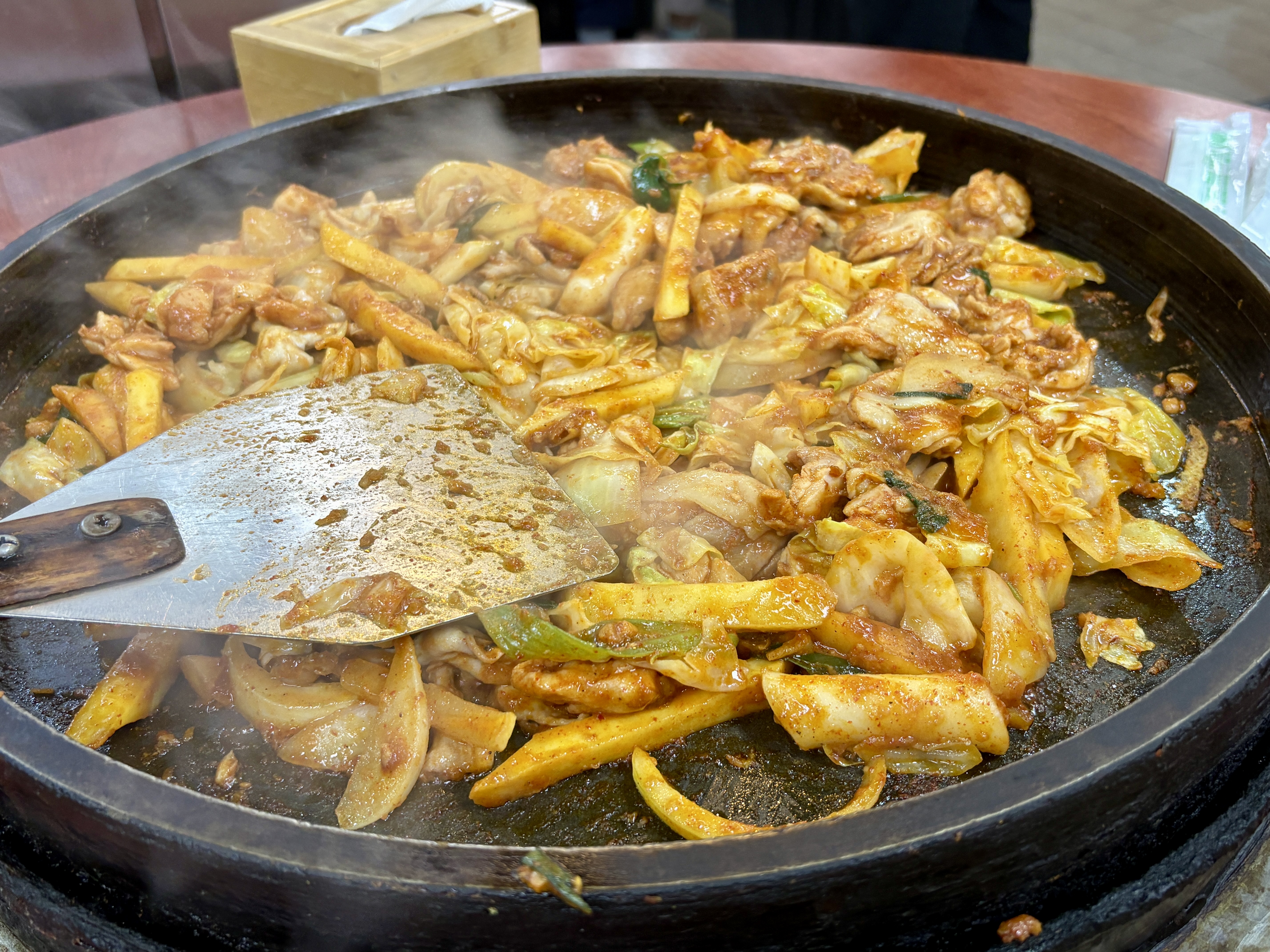
Only about an hour train-ride from Seoul, Chuncheon is an ideal day‑trip destination. The city is most famous for its Chuncheon dakgalbi—a wildly popular Korean dish featuring stir-fried chicken in sweet & spicy gochujang sauce. Since my boyfriend is from Chuncheon, I have all the local recommendations for eating and travelling around the city and for those planning a day trip to Chuncheon, I wanted to share some insider’s tips on everything from taking the Seoul-Chuncheon ITX train to dakgalbi recommendations.
Table of Contents
Why Chuncheon is a Must‑Visit in Gangwon‑do
Chuncheon, the capital of Gangwon-do, is a charming lakeside city nestled between mountains and rivers. The city is famous for its serene landscapes including the Soyang River and its iconic dam which offers sweeping views over the water. The city is also home to Korea’s first Legoland, adding a young and playful energy to Chuncheon’s laid-back atmosphere. And of course, no visit to Chuncheon would be complete without trying dakgalbi, the city’s most signature dish.

Dakgalbi, now a beloved must-try Korean food, traces its roots back to the 1960s in Chuncheon where a post-war boom in poultry farming made chicken a widely available and affordable ingredient. To offer a budget-friendly alternative to pricier grilled beef or pork (galbi), local restaurants began stir-frying diced chicken with gochujang and vegetables, serving it as a hearty comfort food. Over time Chuncheon refined its signature dish into a full-blown culinary identity, and today the city is home to an entire street dedicated to dakgalbi with countless restaurants offering both traditional and trendy recipes.
Boarding the ITX‑Cheongchun
Express Train From Seoul to Chuncheon
My journey began at Wangsimni station, where I boarded the ITX-Cheongchun train bound for Chuncheon. ITX stands for Intercity Train Express, a mid‑distance train service that balances speed and cost: faster than subway lines, more affordable than KTX. ITX‑Cheongchun runs from Seoul’s major hubs like Yongsan and Cheongnyangni, all the way up to Chuncheon. Some trains also stop at Wangsimni or Oksu, so you should double‑check the schedule to board at your most convenient station.
Transferring from Subway to ITX
💡Important tip for transfers: If you’re transferring from a regular Seoul subway line to the ITX, you must tap your metro card at the designated “Transit Card Reader” located near the transit area. There are separate card readers for boarding and alighting, so be sure to use the correct one based on the direction of travel. For example, when I transferred from Line 2 to the ITX at Wangsimni station, I had to tag my card at the Alighting Reader to correctly log my exit from the subway system. If you skip this step, your ride won’t be recognized properly and you may be charged extra or face issues when exiting the station.

💡Another tip for first‑timers is that the ITX shares rails with Gyeongui‑Jungang Line—so when transferring from the regular subway, be sure to follow signs for the jade-colored line. And once there, make sure to board the correct “ITX‑Cheongchun” train by listening to the announcements and checking the signboard.


It’s also essential to book ahead as all ITX seats are pre‑reserved. You can reserve easily through the Korail website or directly at station ticket counters. On the website you have to select your exact departure station (ie. Yongsan or Wangsimni) instead of “Seoul” because the ITX train doesn’t stop at Seoul Station.


Getting Off at Chuncheon
Although the ITX-Cheongchun line terminates at Chuncheon Station, many travelers (especially locals) prefer to get off one stop earlier at Namchuncheon Station . While Chuncheon Station sits closer to the city’s administrative district, Namchuncheon is more centrally located when it comes to tourist attractions and restaurants. The station is also more convenient for accessing bus routes and taxi stands so it’s often smarter to get off at Namchuncheon rather than going all the way to the final stop.
1️⃣Big House Dakgalbi Makguksu
2275 Yeongseo-ro, Chuncheon-si, Gangwon-do
큰집닭갈비막국수
Located just a short walk from Namchuncheon station, Big House Dakgalbi Makguksu has recently undergone a major renovation. With its new modern décor and the neatly arranged tables, it’s an ideal stop for those who want a solid dakgalbi meal before catching the train at Namchuncheon station.


Menu & Pricing
The menu at Big House centers around a variety of dakgalbi options, all priced at ₩15,000 per serving. You can choose between the classic iron plate dakgalbi or charcoal-grilled styles (available in salted, soy sauce, or spicy versions). While makguksu (buckwheat noodles) is featured prominently even from the name of the restaurant, we opted to skip the noodles this time.

For other sides the potato pancake (gamjajeon) is a popular choice and extra toppings like cheese, rice cakes, sweet potatoes can be added to customize your skillet. They also offer variety of Korean alcoholic drinks like soju, Cheongha, makgeolli and beer.
What I Ordered
My boyfriend and I ordered 2 portions of dakgalbi, and the meal began with a generous portion of chicken, cabbage, rice cakes, and sweet potatoes placed onto the sizzling hot plate. The gochujang-based marinade caramelized the chicken and filled the air with a smoky-sweet aroma. Once fully cooked, the dakgalbi was tender and packed with spicy and deeply savory flavor.


Once we finished off most of the dakgalbi, we ordered two must-try add-ons: fried rice and udon noodles, each with additional ₩2,000. These are stir-fried directly in the leftover dakgalbi sauce, mixing in the rice with seaweed flakes and leftover sauce for a crispy finish.
2️⃣1.5 Dakgalbi
77 Human-ro, Chuncheon-si, Gangwon-do
1.5닭갈비 본점
Another dakgalbi stop you must check out at Chuncheon is 1.5 Dakgalbi, one of the most original and authentic dakgalbi restaurants in the city. FYI the meaning behind the name “1.5 Dakgalbi” is that one serving here is generous enough to feed 1.5 people. With its rich history and hearty portions, this place always draws crowds from all over Korea. We’d heard stories of 30 to 60‑minute waits but thanks to the virtual queueing option on CatchTable, we were able to reserve our spot on the way to the restaurant.


Menu & Pricing

Compared to the more extensive and varied menu at Big House, the offerings at 1.5 Dakgalbi are much simpler and more straightforward. The main options here are limited to classic dakgalbi and chicken intestine, both priced at ₩15,000 per serving. Side add-ons are also super classic—fried rice and udon noodles and toppings like rice cakes or sweet potatoes. Drinks range from soju and beer to makgeolli and Cheongha, with a fun addition of house draft beer labeled “Dakgalbeer.”
What I Ordered


Just like at Big House, we ordered 2 portions of dakgalbi and wrapped up our meal with a satisfying round of fried rice and udon noodles. The gochujang-based sauce at both restaurants looked very similar, but I found 1.5 Dakgalbi’s version to have a noticeably deeper and more balanced flavor. It was less overtly spicy but had a rich, tangy umami that just kept me going back for more. If it’s your first time in Chuncheon, I definitely recommend giving 1.5 Dakgalbi a try.
Overall
All in all our dakgalbi day trip to Chuncheon was a perfect escape. If you’re also searching for the best dakgalbi experiences in Korea, Chuncheon will give you the most authentic flavors. Just take the ITX train from Seoul and enjoy a day filled with city’s the relaxed charm and delicious moments. And If you’re planning more train-ride getaways, don’t forget to check out my other posts on day trips from Seoul!
Leave a Reply