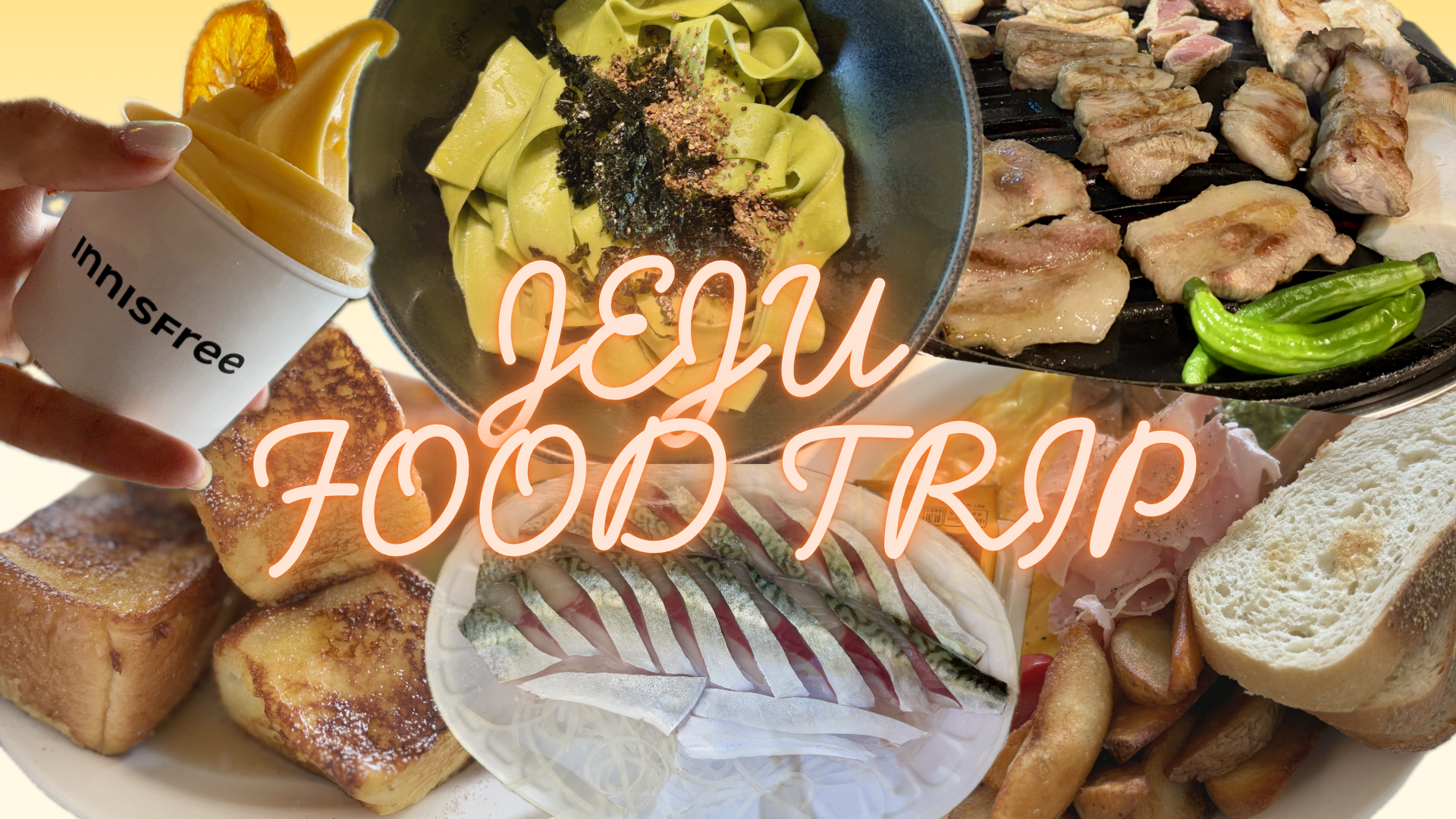
As the final chapter of my Jeju trip series, I’d like to share my Jeju Island itinerary that was packed with hidden gem restaurants and cafes. In such a short time I tried everything from smoky black pork to green tea noodles and desserts. I personally think Jeju is the best place in Korea for travelers who crave both adventure and a truly diverse food culture. For those who need ideas of what to eat in Jeju, this post will walk you through my complete two-day route from the airport to Seogwipo!
My Jeju Island Itinerary (2 Days)
Table of Contents
1️⃣Cafe Josik
Brunch Cafe Near Jeju Airport
I arrived in Jeju at around 9:30am which was much earlier than the hotel check-in time, so I decided to drop by Josik, a charming brunch cafe located about a 20-minute drive from the airport. Run by a married couple who love nature and animals, the cafe exudes a peaceful vibe with its green garden and warm house-like interior.
I ordered the signature Josik Plate (KRW19,000) with folded eggs, thin slices of bread, potato wedges, avocado mash and sausages—perfect ingredients for assembling your own open-faced sandwich. Alongside the brunch plate I also ordered the French toast (KRW15,000) made with thick, golden-brown slices, sweetened with a light dusting of powdered sugar and a drizzle of syrup. A scoop of vanilla ice cream and a mix of fresh fruit on the side added a refreshing sweetness to the plate.
Pet-Friendly Wellness Cafe in Jeju
The biggest charm of this cafe is probably the two mascot dogs (one golden retriever and a malamute): you’ll see them wandering, relaxing by tables, greeting visitors, or just lounging in corners. FYI the cafe also hosts outdoor yoga classes with the dogs, so you should check their Instagram account if you’re looking for a “Doga” session in Jeju🐶!
Our next stop was House of Records, a bakery and lifestyle shop in a picturesque red-brick building near Gwakji Beach. When we arrived on a Saturday afternoon, there was already a long line of locals and tourists waiting outside. FYI there’s no need to register at a kiosk or leave your number; you simply wait until the staff invites you in, place your order, and browse through the lifestyle corner while your orders are prepared. Once ready, the staff calls your order number for pickup. Because this is a strictly take-out only shop, I recommend finding a picnic spot at the nearby beach to savor the tarts at their freshest state.
We ordered a mix of their signature egg tarts and corn tarts, but ended up bringing them back to the hotel and tasting them a few hours later. Both tarts came in a soft and flaky pastry-like crust. The egg tart had a soft custard-like filling, whilethe corn tart held an extra-runny cream cheese center sweetened with condensed milk. The corn version was noticeably sweeter and a little too cheesy for my taste.
3️⃣Jeju Dang
After getting our tarts we headed to Jeju Dang, a sprawling bakery cafe near the famous Saebyeol Oreum volcanic cone in Aewol. Created by an agricultural machinerycompanyDaedong, Jeju Dang celebrates the island’s eco-friendly identity with unique bakeries inspired by seasonal harvests like pumpkin, corn, and sweet potato.
Must-Visit Jeju Bakery
To be honest Jeju is already full of giant bakery cafes, and potato & sweet potato-shaped breads have been trending in Korea for years. But Jeju Dang stood out with a theme and concept I’d never seen elsewhere. The cafe celebrates Jeju’s charm through bakeries that blend organic local ingredients and inventive recipes/ideas (ie. pumpkin bread topped with a a real pumpkin stalk🎃). And the space itself is strikingly spacious with high ceilings, organic décor, and floor-to-ceiling windows framing views of Jeju’s grand landscape.
4️⃣Poongro
Jeju Black Pork in Seogwipo
After checking into our hotel in Seogwipo, it was time for one of Jeju’s most essential culinary experiences: Jeju black pork (흑돼지), a native breed raised on the island known for its tender meat and deep flavor. We chose Poongro, a modern Korean barbecue restaurant renowned for its aged meat and attentive service. As a group of four, we started with the Signature Set for 3 (which included pork shoulder and pork belly) and added a few sides like garlic ramyeon, stone pot bibimbap, and fluffy steamed eggs.
At Poongro the staff handles all the grilling for you so each cut of meat is cooked to perfection at the table while they also recommend the best pairing for every cut; the condiments include wasabi, salt, garlic sauce and meljeot (which is Jeju’s signature anchovy sauce). The pork itself was extra tender and juicy, and I really appreciated the clean interior and the gentle service of the staff.
Signature Set for 3
Signature Set for 3
Hot Stone Bibimbap
Steamed Eggs
5️⃣Woojung Raw Fish Center
Best Raw Fish in Seogwipo
To round out our first day, we made a quick stop at Woojung Raw Fish Center, located just a short drive from Poongro. While the black pork is a specialty for meat lovers, Jeju island is equally famous for its fresh seafood, especially raw mackerel and red-banded lobster. We ordered a whole mackerel (KRW25,000) and the staff netted a live fish straight from the tank before expertly slicing it into glossy thin pieces on the spot.
We took our order to go to enjoy it as a late-night snack back at the hotel. The freshness was remarkable with a clean, briny sweetness. Paired with condiments like soy sauce, gochujang, wasabi and seaweed, it became the perfect accompaniment for our soju.
6️⃣Osulloc Tea Museum’s Noodle Bar & Innisfree Cafe
Matcha Noodles
Before our return flight to Seoul, we decided to try out the Matcha Noodle Bar, a new addition to the famous Osulloc Tea Museum. FYI the museum itself opens at 9am but the noodle bar starts serving at 10, so if you arrive early you should take some time to browse the gift shop for some unique green tea snacks and souvenirs.
The noodle bar specializes in house-made noodles infused with Jeju green tea. We ordered the Cold Matcha Bibim Noodles, Warm Matcha Noodles, and a side of Boiled Pork Slices (수육). My personal favorite was the cold bibim noodles, which balanced the earthy aroma of perilla oil with the gentle bitterness of green tea. Thewide matcha noodles were delightfully chewy, and the seasoning had just enough spice to keep each bite nutty and savory. The noodle bar alone makes the museum worth visiting even if you’re not a tea drinker.
Cold Matcha Bibim Noodles
Warm Matcha Noodles
Warm Matcha Noodles
Boiled Pork Slices
Jeju Green Tea Cafe
Most visitors to the Osulloc complex head straight for the main Osulloc cafe, but we went for the quieter Innisfree Jeju House where you can find a more spacious seating and indulge in the panoramic views of the rolling green tea plantations. Here we ordered the special ice cream + dolsongi cake set: theJeju tangerine ice cream had a froyo-like texture with a bright citrus tang, and the dolsongi cake (named after Jeju’s volcanic stones) was a hallabong-flavored cake wrapped in crunchy black shell that resembles the basalt rock.
Overall
Two days on Jeju Island was short, but with careful planning I could fit in an impressive range of meals and experiences. In just 48 hours we feasted on perfectly grilled black pork, ocean-fresh sashimi, and matcha-infused noodles, all against a backdrop of sceneries that can only be found in Jeju. If you’re planning a Jeju island itinerary as a foodie or just looking for inspiration on what to eat in Jeju, these stops might be a great starting point to discover the island’s unique flavors.



Leave a Reply