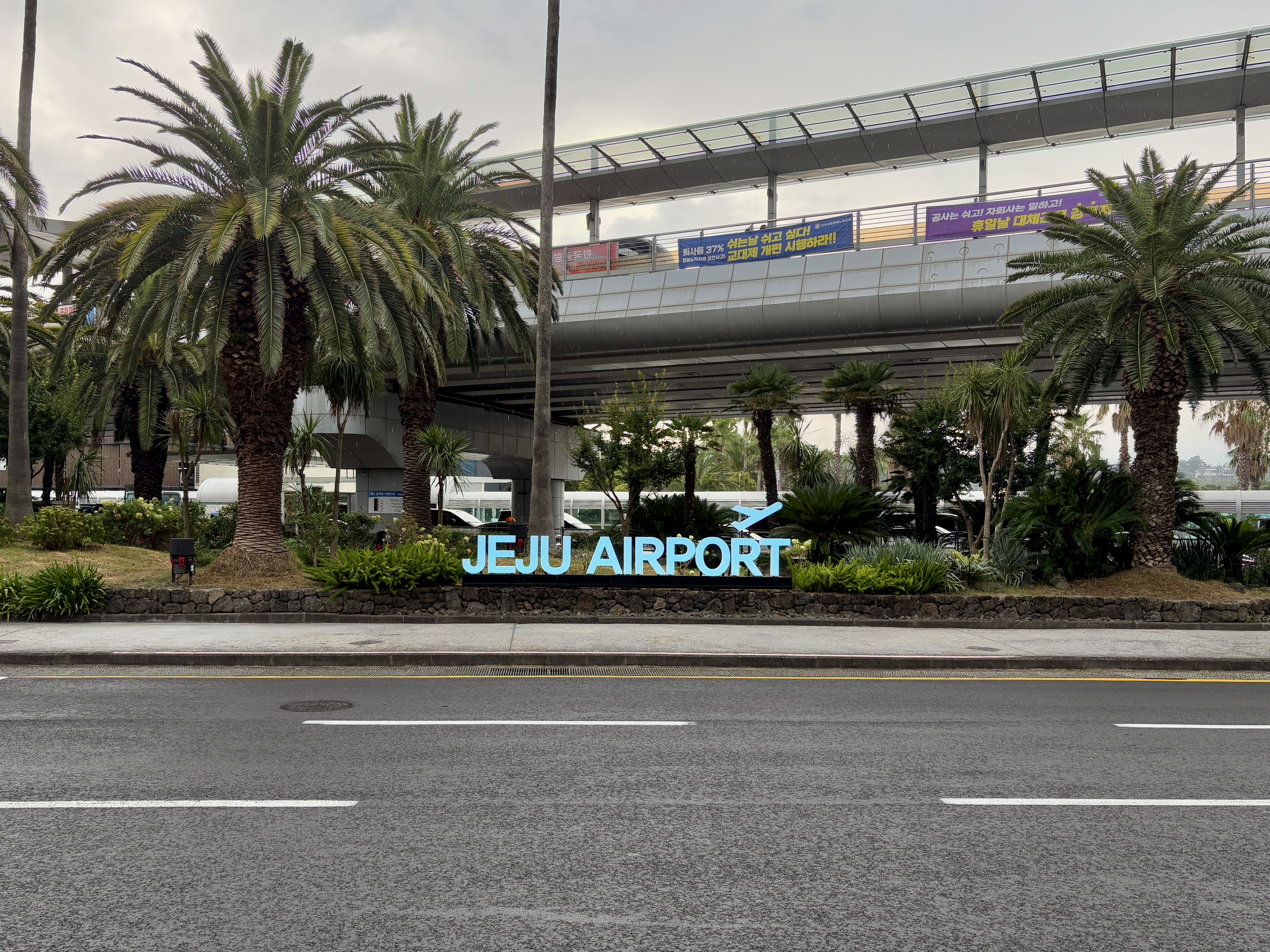
If you’re wondering how to go to Jeju from Seoul, this guide is for you. The Seoul ⇄ Jeju route is one of the most common domestic trips taken in Korea, with flights departing almost every 15 to 20 minutes at peak times. Anything from a quick weekend getaway to a long workcation, Jeju Island offers a refreshing contrast with its coastal scenery and slower pace of life. In this post, I will share the detailed experience of my recent trip to Jeju with my cousins.
Table of Contents
Getting to Gimpo Airport from Seoul
Taking the Subway to Gimpo Airport
Gimpo Airport is directly connected to several lines including Line 5 (the purple line), Line 9 (the gold line) and the Airport Railroad (AREX). This makes it possible to reach Gimpo from almost any district in Seoul without difficulty. The train ride usually takes between 30 and 60 minutes depending on where you begin. One of the advantages of the subway is that it is not affected by traffic, so you can estimate your arrival time more accurately. The station also links to the airport terminal through an underground passage with clear signs and convenient transcalators.


Taxi from Seoul to Gimpo Airport
If you take a taxi from central areas such as Myeongdong or City Hall, the fare ranges between ₩20,000 and ₩30,000 depending on distance and traffic conditions. Departing from the Gangnam area or traveling during peak rush hours can add extra time to the journey.
Departure Process at Gimpo Airport
The domestic terminal at Gimpo Airport is significantly smaller than Incheon’s sprawling international facilities, which means you do not need to worry about long walks or queues.
Checking In


Online check-in for domestic flights typically opens about 24 hours before departure, so I recommend checking in early through your airline’s website or app to secure the seat you want. If you’ve already checked in online you can simply use the QR code on your phone, or you can also check in using the self-service kiosks, which allow you to select a seat and print a paper boarding pass on the spot.


Once you have your boarding pass and have dropped your baggage, you can head over to the security screening. The security process for domestic flights is much simpler than for international travel. You still need to present a valid ID (such as a passport or Korean registration card), but there are no lengthy immigration procedures.
At the Departure Zone


The domestic departure zone after security includes a food court where you can get quick meals, a few smaller eateries/cafes, and a CU convenience store. The convenience store is particularly useful for last-minute purchases of drinks, snacks and small travel essentials. Boarding usually begins around 20 minutes before departure.


Flight Time from Seoul to Jeju
The flight from Seoul to Jeju takes only about an hour. In-flight service is minimal because of the short duration, often limited to a quick water service, and most low-cost carriers may not serve anything at all.
Departure Process at Jeju Airport
When it is time to return to Seoul, the process at Jeju Airport mirrors what you experienced at Gimpo. After entering the departure hall, you check in at the counter or kiosk, print your boarding pass, and drop any checked luggage. Once you pass security, you arrive in the departure zone, which is noticeably more compact compared to Gimpo Airport. No matter how many times I fly through Jeju, I always get shocked by how crowded it gets. The space always feels hectic, with long lines at both boarding gates and popular souvenir shops.


It’s also important to keep in mind that Jeju is infamous for its unpredictable weather. Heavy rain, sudden fog, and strong winds often disrupt flights, and delays are common. If you’re planning an important schedule back in Seoul, it’s wise to allow some buffer time. (FYI my flight back to Seoul also got delayed by about an hour.)
Jeju Airport Shopping (feat. Jeju Souvenirs)
One of the most enjoyable parts of departing from Jeju Airport is browsing the shopping options. The shops focus on local products and specialty snacks that represent Jeju. The airport also has duty-free shops where you can buy Korean cosmetics, perfumes, and international brands, but most travelers seem to focus on the local specialties that represent the island.


My first recommendation is to look for the Maeum Sand from Paris Baguette. Once you’re in the departure area, you’ll usually notice a queue of people lining up to secure a box before their flight. Maeum Sand is a buttery cookie sandwich with peanut butter & cream flavor, and it’s exclusively sold only in Jeju.


This time I tried the new hallabong(Jeju orange) flavor featuring a fresh citrus cream instead of the original peanut butter filling. Each box was priced at 18,000 KRW with 10 cookies inside.


Another highlight of Jeju airport shopping is the Kakao Friends and Zanmang Loopy character stores. Here you can find Jeju-exclusive editions of the beloved characters, including plush toys, stationery, mugs, and keychains. The designs often feature the characters in Jeju’s iconic settings, such as citrus hats or volcanic stones.
Overall
Traveling from Seoul to Jeju is one of the simplest and most satisfying trips you can make in Korea. The short one-hour flight makes the trip super efficient, yet the nature-filled island greets you with completely different sceneries and experience from Seoul. So if you want to make the most of your Korea trip, you should definitely add Jeju Island to your itinerary🍊!
Leave a Reply